What should I do immediately after being arrested?
The first 24–48 hours after an arrest often shape the entire outcome of a case, so what you do (and don’t do) in that window matters more than most people realize. Exercise your right to remain silent, don’t discuss your case with anyone except your attorney — not friends, not family, not on social media — and request legal representation immediately, even before you’ve been formally charged. Anything you say to police, even something that feels harmless or like you’re “just explaining your side,” can be used against you later.
Stay silent, ask for a lawyer, and call us as soon as you can — even from jail.
Can my lawyer really get my case dismissed?
Dismissals happen more often than most people expect, but they’re earned through specific legal strategies, not luck — things like challenging how evidence was obtained, identifying procedural errors, negotiating with prosecutors, or showing the evidence doesn’t meet the legal standard required for conviction. Every case is different, and not every case can be dismissed, but an experienced attorney knows exactly which angles to pursue and when.
We walk through the realistic paths to dismissal for your specific charge during your free consultation.
What happens after a first-offense DWI/DUI arrest?
A first DWI/DUI charge can feel overwhelming, but it doesn’t automatically mean a conviction, a criminal record, or losing your license permanently. There are usually multiple steps between arrest and any final outcome — an administrative license hearing (often with a strict deadline you can’t miss), arraignment, and potential plea or trial — and the choices you make at each stage affect the rest.
Will hiring a private attorney really make a difference vs. a public defender?
Yes — private counsel means more time, attention, and resources dedicated specifically to your case from day one.
Public defenders are licensed attorneys who can absolutely do good work, but they’re often managing extremely heavy caseloads with limited time to dedicate to any single case. Private counsel means an attorney with more bandwidth to investigate your specific circumstances, build a tailored defense strategy, negotiate directly and persistently with prosecutors, and keep you informed at every stage rather than just at court dates. For many of our clients, that difference in attention is what changes the outcome of the case.
What are my defense options if I'm facing drug charges?
Drug charges range from simple possession to distribution and trafficking, and the right defense strategy depends heavily on how the evidence was gathered, the quantity involved, and your prior record. Common defense angles include challenging the legality of the search or stop, questioning chain-of-custody on the substance itself, and negotiating alternative sentencing like diversion programs where eligible.
I've been charged with assault — what should I know?
Assault charges carry a wide range of severity, from misdemeanor-level disputes to felony charges with serious prison exposure, and the right defense often hinges on details like intent, self-defense, and the credibility of witness accounts. We take time to understand the full context of what happened — not just the police report — before building your defense.
In Texas, Illinois and Missouri, certain charges and convictions may be eligible for expungement or sealing, which can meaningfully improve your ability to pass background checks for jobs, housing, and licensing. Eligibility depends on the type of offense, how the case was resolved, and how much time has passed.
Learn more about our Expungement services or contact us to find out if you qualify.
Do you handle federal criminal cases?
Yes. Federal charges carry different procedures, sentencing guidelines, and stakes than state-level charges, and require attorneys experienced specifically in federal court.
How much does it cost to hire a criminal defense lawyer, and do you offer payment plans?
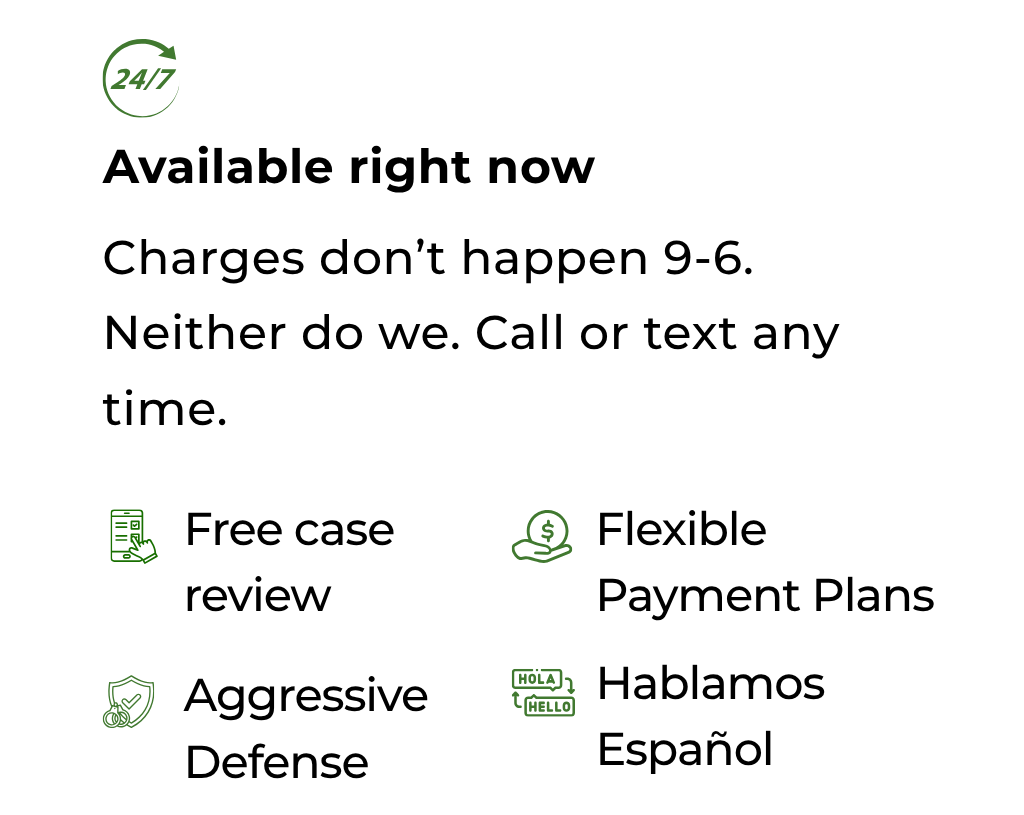
We offer free, confidential consultations so you can understand your situation and options before committing to anything. Costs vary depending on the complexity of the charge and the county/court involved, and we’re upfront about pricing from the start — no hidden fees, no surprises. We also offer flexible payment plans, because we believe quality legal defense shouldn’t be out of reach.
We also offer flexible payment plans, because we believe quality legal defense shouldn't be out of reach.
Still have questions?
Talk to a specialist — free, no obligation, straight answer about your case within minutes.
*Non-confinement outcomes” include dismissals, reductions to lesser offenses, diversion or deferred disposition programs, probation, time served, misdemeanor resolutions, and other negotiated or adjudicated outcomes that did not result in a sentence requiring imprisonment in the Texas Department of Criminal Justice or the Department of Corrections of Illinois, Missouri, Kansas, or another prison facility. Statistics are based on the firm’s internal review of closed criminal matters during the stated measurement period. Past results do not guarantee future outcomes. Every case is unique.