









If you’ve been arrested for DWI (Driving While Intoxicated) for the first time, you’re probably scared and confused about what comes next.
A DWI first offense is serious, but it’s not the end of your life. Many people successfully fight DWI charges or minimize the consequences. This comprehensive guide explains what happens after a DWI arrest, your legal rights, possible penalties by state, and your defense options in Texas, Missouri, and Kansas.
What Is DWI and Why It Matters?
DWI stands for “Driving While Intoxicated.”
It means you were driving a vehicle while impaired by alcohol, drugs, or both. Under the Model Traffic Safety Act (adopted by all 50 states), you can be charged with DWI if your blood alcohol content (BAC) is 0.08% or higher, or if you’re impaired to the degree that your normal faculties are affected (see Tex. Penal Code § 49.04 for Texas; Mo. Rev. Stat. § 577.010 for Missouri).
A DWI first offense is different from a DWI with prior convictions. Your first offense might seem less serious, but it still carries real consequences. According to the National Highway Traffic Safety Administration (NHTSA), DWI first offenses cost an average of $10,000 in fines, legal fees, and other consequences—not including potential jail time or license suspension.
Important distinction: In some states, DWI is called DUI (Driving Under the Influence). In others, like Texas, it’s DWI. The meaning is essentially the same, though some states distinguish between BAC levels and actual impairment.
What Happens After a DWI Arrest: The 5-Step Process
The first few hours after a DWI arrest are critical. Understanding this process protects your rights and preserves evidence for your defense.
Step 1: The Traffic Stop and Initial Indicators
Police must have a legitimate reason to stop your vehicle. Under the Fourth Amendment and state vehicle codes, “reasonable suspicion” is required. Common reasons include swerving, running red lights, or equipment violations (see Delaware v. Prouse, 440 U.S. 648 (1979) for the constitutional standard).
During the stop, police observe for signs of impairment: slurred speech, red eyes, odor of alcohol, or fumbling with documents. These observations form the basis of impairment suspicion.
Step 2: Field Sobriety Tests (FSTs)
Police may ask you to perform field sobriety tests. These are voluntary—you have the right to refuse them. The three standardized tests are:
- Walk-and-turn test: Walk a straight line heel-to-toe, turn, and walk back
- One-leg stand test: Stand on one leg while counting
- Horizontal gaze nystagmus (HGN) test: Follow an object with your eyes
Critical fact: These tests are subjective and can be failed even if you’re not impaired. Many factors affect performance: medical conditions, fatigue, nervousness, and even the surface you’re standing on. Courts have recognized the limitations of FSTs (see Daubert v. Merrell Dow Pharmaceuticals, 509 U.S. 579 (1993) for evidentiary standards).
Step 3: Breathalyzer or Blood Test
After FSTs, police request a breathalyzer or blood test. You have the right to refuse, but refusal has consequences in every state. In Texas, refusal results in automatic license suspension.
However, a refusal cannot prove you were over the limit. Some attorneys argue refusal is strategically better than a failed test. Breathalyzers require proper calibration and maintenance—failure to maintain them can invalidate results (see State v. Richie, 632 N.W.2d 559 (Minn. 2001) for calibration standards).
Step 4: Arrest and Booking
If police believe you’re impaired, you’re arrested. During booking at the police station or jail, you’re photographed, fingerprinted, and your property is inventoried. You have limited phone access—call an attorney if possible.
Exercise your rights during booking: You have the right to remain silent. You have the right to an attorney. Use these rights. Don’t answer questions without counsel present.
Step 5: Initial Appearance (Within 24-72 Hours)
You must be brought before a judge within 24-72 hours for an “initial appearance” or “arraignment.” At this critical hearing (required by the Sixth Amendment and state criminal procedure rules):
- You learn what charges you face
- The judge sets bail or release conditions
- You can request a public defender or hire private counsel
- Your next court date is scheduled
This is where an attorney becomes crucial. A skilled DWI attorney can argue for lower bail, release on your own recognizance, or other favorable conditions. An attorney with local experience knows how specific judges in your jurisdiction typically handle bail decisions.
Why Fight a DWI First Offense: Real Defenses Exist
Many DWI cases have defensible issues. A skilled DWI attorney investigates and finds them:
- Illegal traffic stop: If police lacked reasonable suspicion, evidence is excluded
- Improperly administered breathalyzer: Procedures must be followed exactly
- Rising blood alcohol: Alcohol takes time to absorb—you may have been legal while driving
- Medical conditions: GERD, diabetes, and other conditions cause false breathalyzer readings
- Improper FST administration: These tests have strict procedures.
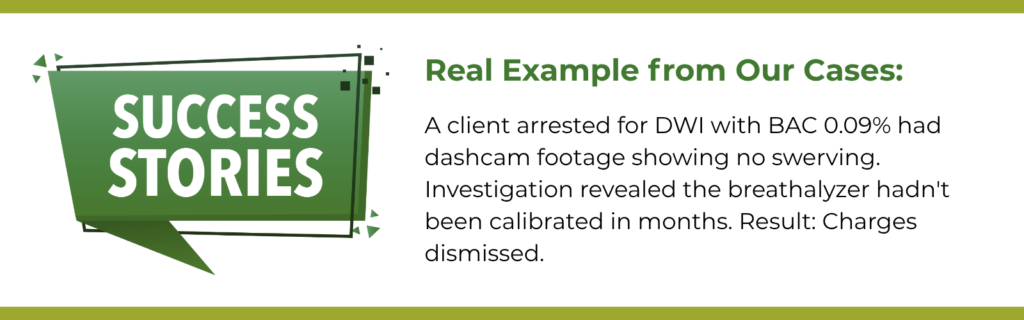

Don’t wait to get legal help. Contact the Law Offices of Roderick C. White for a free consultation. We’ll review your case, identify defenses, and explain your options.
Call 24/7. We speak English and Spanish. Free consultation. No upfront costs.
FAQ: DWI First Offense Questions Answered
Q: Should I take the breathalyzer or refuse it?
A: This is complicated and case-specific. Refusing means your license gets suspended automatically, but a refusal cannot prove you were over the limit. Taking it and failing gives prosecutors clear evidence. Discuss with an attorney immediately—the answer depends on your specific situation, BAC estimate, and state law.
Q: Can I get my DWI expunged or sealed?
A: This depends on your state and case outcome. Texas allows expungement if acquitted (Tex. Code Crim. Proc. art. 55.01). Missouri allows expungement after probation completion in some cases (Mo. Rev. Stat. § 610.140). Some states don’t allow DWI expungement at all. Ask your attorney about options in your jurisdiction.
Q: Will a DWI conviction affect my job?
A: Many employers consider DWI convictions, especially for driving or safety positions. But a DWI conviction is not automatically disqualifying. The impact depends on the job and employer. Fighting your case aggressively minimizes employment impact.
Q: How much does DWI representation cost?
A: Complex cases or trials cost more. Many offer payment plans. Ask about costs during your initial free consultation.
Q: Can I get probation instead of jail?
A: Often, yes. For first offenses with no accidents or injuries, judges frequently offer probation. A skilled attorney argues for probation and negotiates favorable terms.
Q: What if medical conditions affect breathalyzer accuracy?
A: Conditions like diabetes, GERD, and others can affect breathalyzer accuracy. Medical evidence challenging the result’s reliability is powerful at trial. Tell your attorney if you have relevant conditions.
Q: Is a DWI first offense a felony or misdemeanor?
A: In most states, DWI first offense (with no accident or injury) is a misdemeanor. It becomes a felony if you caused an accident, injured someone, or have multiple prior DWI convictions. Either way, proper representation is critical.
Q: Can my DWI case be dismissed?
A: Yes, sometimes. If police violated your rights, if the breathalyzer/blood test was administered improperly, or if evidence is weak, the case might be dismissed. An attorney investigates to find possible dismissals. Never assume your case is hopeless.
The information in this blog post is general and should not be considered legal advice. Please contact our legal team directly for specific guidance regarding your unique situation.