










What to Do If You're Arrested: Protecting Your Rights and Your Future
Quick Answer: If you’re arrested, remain silent, request an attorney immediately, do not consent to searches, avoid discussing your case with anyone except your lawyer, document everything, and contact an experienced criminal defense attorney within 24 hours to protect your constitutional rights and build a strong defense.
Being arrested is one of the most stressful experiences you can face. Whether you’re innocent or facing serious charges, the decisions you make in the first hours after an arrest can determine the outcome of your case. Unfortunately, many people unknowingly damage their defense by talking to police, agreeing to searches, or trying to “explain” their situation.
As criminal defense attorneys licensed in Texas, Missouri, and Illinois, with over 70 years of combined experience, we’ve helped thousands of clients navigate the criminal justice system. This guide explains exactly what to do if you’re arrested, your constitutional rights, and how to protect yourself from common mistakes.
Understanding Your Constitutional Rights
Before we discuss what to do during an arrest, let’s clarify the rights that protect you:
The Fifth Amendment: Your Right to Remain Silent
You are never required to answer police questions during or after an arrest. In fact, anything you say can and will be used against you in court. Therefore, exercising this right is not suspicious – it’s smart.
The Sixth Amendment: Your Right to an Attorney
You have the right to legal representation at every stage of the criminal process. Additionally, if you cannot afford an attorney, one will be appointed to you. However, public defenders often handle overwhelming caseloads, whereas private attorneys can dedicate more time to your case.
The Fourth Amendment: Protection Against Unlawful Searches
Police need probable cause to arrest you and typically need a warrant to search your home or vehicle. Nevertheless, there are exceptions, which is why never consenting to searches is crucial.
Step 1: Stay Calm and Remain Silent
What to Do: If police arrest you, stay calm and cooperative. However, do not resist arrest, even if you believe it’s unjust. Resisting can lead to additional charges and potential injury.
What to Say: After providing your basic identifying information (name and address), clearly state:
- “I am exercising my right to remain silent.”
- “I want to speak with my attorney.”
- “I do not consent to any searches.”
Then, stop talking. Police may try to convince you that staying silent makes you “look guilty” or that “cooperating” will help your case. Nevertheless, these are tactics designed to get you to incriminate yourself.
Common Mistake to Avoid: Many people believe they can “talk their way out” of an arrest by explaining the situation. However, in reality, police already believe they have enough evidence to arrest you. Therefore, anything you say will only provide them with additional ammunition.
Step 2: Request a Lawyer Immediately
Why This Matters: Once you request an attorney, police must stop questioning you. Furthermore, having legal representation from the beginning ensures your rights are protected throughout the process.
What to Say: “I want my lawyer present before I answer any questions.”
Repeat this statement if police continue asking questions. Additionally, do not let them convince you that “getting a lawyer makes you look guilty.” In fact, prosecutors and judges know that requesting counsel is a constitutional right, not evidence of wrongdoing.
Step 3: Do NOT Consent to Searches
Your Rights: Police cannot search your home, vehicle, or personal belongings without:
- A valid search warrant
- Probable cause (reasonable belief that evidence of a crime is present)
- Your consent
What to Say: “I do not consent to any searches.”
Even if police say they “will get a warrant anyway,” do not consent. Furthermore, if they conduct an illegal search, any evidence they find may be inadmissible in court – but only if you didn’t give consent.
Important Exception: Police can conduct a “pat-down” search for weapons if they have reasonable suspicion you’re armed. Additionally, if you’re arrested, they can search your immediate surroundings. However, broader searches of your home or vehicle require warrants or consent.
Step 4: Document Everything You Remember
What to Record: As soon as possible after your arrest, write down:
- Date, time, and location of arrest
- Names and badge numbers of arresting officers
- Exact words police used
- Whether you were read your Miranda rights
- Any injuries you sustained
- Names and contact information of witnesses
Why This Matters: Memory fades quickly. Therefore, detailed contemporaneous notes help your attorney identify rights violations, inconsistencies in police accounts, and potential defenses.
Pro Tip from Our Legal Team: If police violate your rights during the arrest process (for example, by continuing to question you after you request a lawyer), this can lead to evidence suppression or even case dismissal. However, you must document these violations immediately.
Step 5: Avoid Discussing Your Case with Anyone
Who NOT to Talk To:
- Cellmates or inmates: Jailhouse informants often report conversations to prosecutors in exchange for reduced sentences
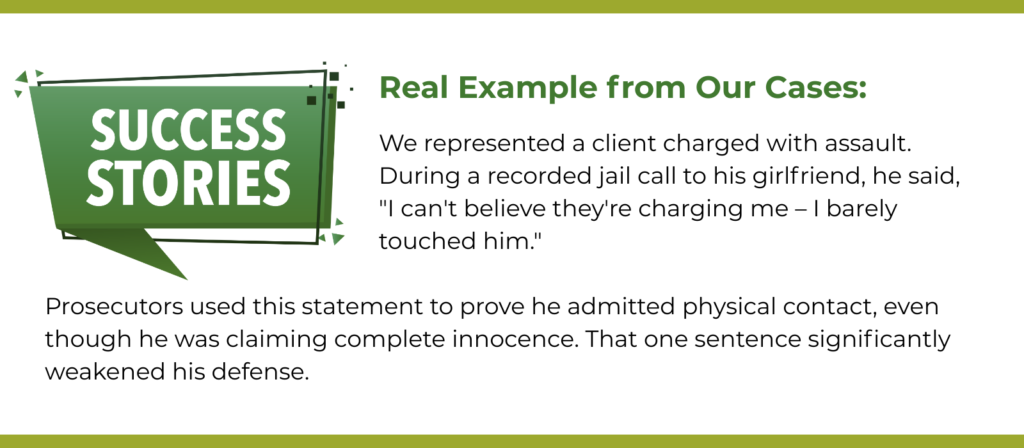
- Friends or family on recorded jail calls: All jail phone calls are recorded and can be used as evidence
- Police or detectives: Even “informal” conversations are investigatory
- Social media: Prosecutors routinely review defendants’ social media accounts
Who You CAN Talk To:
- Your attorney: Attorney-client privilege protects these conversations
- Your attorney’s staff: This protection extends to paralegals and investigators working on your case
How We Build Your Defense
When you hire the Law Offices of Roderick C. White, we immediately begin working to protect your rights and build your defense:
Immediate Actions:
- Case evaluation – We review all charges and evidence against you
- Communication with authorities – We handle all interactions with police and prosecutors
- Bond hearings – We argue for your release or reduced bail
- Evidence preservation – We ensure critical evidence is secured
Investigation:
- Police reports and arrest records – We identify procedural errors and rights violations
- Body camera and dashcam footage – We obtain all available video evidence
- Witness interviews – We locate and interview witnesses who support your case
- Expert witnesses – We consult forensic specialists, medical professionals, and other experts when needed
Defense Strategies:
- Constitutional violations – If police violated your Fourth, Fifth, or Sixth Amendment rights, we file motions to suppress evidence
- Insufficient evidence – We challenge weak or circumstantial evidence
- Mistaken identity – We investigate whether you were misidentified
- Alibi defense – We gather evidence proving you were elsewhere when the crime occurred
- Self-defense – In assault cases, we establish you acted in reasonable self-defense
Why Experience Matters in Criminal Defense
Inexperienced Attorney | Our Firm (70+ Years Combined Experience) |
Accepts weak plea deals | Negotiates aggressively for reduced charges or dismissal |
Misses rights violations | Identifies constitutional violations and files suppression motions |
Limited trial experience | Extensive courtroom experience with proven track record |
Generic defense strategy | Customized defense based on case specifics |
Poor communication | Regular updates and clear explanations throughout process |

Multi-State Licensing
We’re licensed to practice in Texas, Missouri, Illinois, and Kansas, giving us extensive knowledge of each state’s criminal laws, court procedures, and local prosecutors.
Over 70 Years of Combined Experience
Our attorneys have successfully defended thousands of clients. Consequently, we understand what works in criminal defense and how to achieve the best possible outcomes.
Aggressive Representation
We don’t accept unfavorable plea deals. Instead, we thoroughly investigate your case, challenge weak evidence, and fight for the best possible outcome.
Personal Attention
Unlike public defenders handling hundreds of cases, we limit our caseload to provide each client with the attention they deserve. Additionally, you’ll have direct access to your attorney throughout the process.
Bilingual Services
We provide legal services in both English and Spanish, ensuring clear communication regardless of your preferred language.
Flexible Payment Plans
We understand that criminal charges create financial stress. Therefore, we offer affordable payment plans to make quality legal representation accessible.
Your Next Steps After an Arrest
If you or a loved one has been arrested in Texas, Missouri, or Illinois:
- Exercise your right to remain silent – Do not discuss your case with anyone except your attorney
- Request legal representation – Tell police you want to speak with a lawyer
- Document everything – Write down details about your arrest as soon as possible
- Contact us immediately – Call (855) 446-8968 for a FREE, confidential consultation
Remember: I GOT YOU, so call anytime day or night (24/7).
The legal professionals at the Law Offices of Roderick C. White are ready, willing, and able to assist you and your loved ones through such difficult times. With more than 70 years of combined experience in criminal defense across four states, we have the knowledge, skills, and dedication to protect your rights and fight for your future.
Don’t face the criminal justice system alone. Therefore, contact us today for experienced representation that puts your interests first.

The information in this blog post is general and should not be considered legal advice. Please contact our legal team directly for specific guidance regarding your unique situation.