









Quick Answer: After a car accident, prioritize safety by moving to a secure location, calling 911, documenting the scene with photos, exchanging information with all parties, seeking immediate medical care, avoiding statements to insurance adjusters, and contacting an experienced accident attorney within 24-48 hours.
Getting into a car accident can be overwhelming and confusing. However, the actions you take in the minutes and hours following a crash can significantly impact your ability to recover compensation for your injuries. As attorneys with over 70 years of combined experience representing accident victims across Texas, Missouri, Illinois, and Kansas, we’ve seen how simple mistakes can cost people thousands of dollars in potential settlements.
This comprehensive guide walks you through exactly what to do after a car accident, plus common mistakes to avoid.
Why the First 24 Hours After a Car Accident Matter Most
The immediate aftermath of an accident is critical for several reasons:
- Evidence disappears quickly – Skid marks fade, witnesses forget details, and surveillance footage gets erased
- Insurance companies act fast – Adjusters may contact you within hours, hoping you’ll accept a low settlement before understanding your rights
- Injuries can worsen – Some serious injuries like whiplash or internal bleeding don’t show symptoms immediately
- Legal deadlines start ticking – Each state has specific time limits for filing accident/injury lawsuits, so prompt action is essential
Let’s break down the exact steps you need to take.

What to Do: First and foremost, stop your car immediately. Therefore, never leave the scene of an accident, even if it seems minor. In fact, leaving can result in criminal charges, including hit-and-run penalties.
Next, assess whether anyone is injured. Consequently, if you or others need medical attention, call 911 right away. Meanwhile, if possible, move your vehicle out of traffic to prevent additional collisions. Otherwise, turn on your hazard lights and use cones or flares if available.
Common Mistake to Avoid: Many people refuse medical treatment at the scene because they “feel fine.” However, adrenaline masks pain, and symptoms of serious injuries like concussions or spinal damage can appear days later. Additionally, insurance companies often use delayed medical treatment as evidence that you weren’t truly hurt.

Why This Matters: An official police report documents crucial details about the accident, including:
- Date, time, and location
- Weather and road conditions
- Statements from all drivers involved
- Officer’s assessment of fault
- Citations issued
What to Do: Even if the accident seems minor, always call the police. Then, cooperate fully with the responding officer. However, stick to the facts – don’t speculate about who was at fault or apologize, as these statements can be used against you later.
Pro Tip from Our Legal Team: Request a copy of the police report number at the scene. Later, you can obtain the full report from the local police department. This document becomes vital evidence if you pursue a claim.

What to Photograph:
- All vehicles involved (damage from multiple angles)
- License plates
- Street signs and traffic signals
- Skid marks or debris
- Road conditions (potholes, poor lighting, weather)
- Visible injuries (bruises, cuts, swelling)
Why This Step Is Critical: Physical evidence at accident scenes changes rapidly. For instance, skid marks fade after rain, debris gets cleared, and damaged vehicles get repaired. Therefore, take photos immediately using your smartphone. Additionally, return to the scene later if you didn’t have a camera available.
Our Experience: We’ve won cases where a single photo of a faded stop sign proved our client wasn’t at fault. Similarly, photos showing the extent of vehicle damage help establish the severity of impact, which correlates to injury severity.

Step 4: Exchange Information (But Don’t Discuss Fault)
Information to Collect from All Parties:
- Full names and contact information
- Insurance company names and policy numbers
- Driver’s license numbers
- Vehicle makes, models, and license plates
- Names and contact information of passengers
Also Get Witness Information: Independent witnesses can be crucial for your case. Therefore, ask for names, phone numbers, and email addresses from anyone who saw the accident. Otherwise, witnesses may become impossible to locate later.
What NOT to Say:
- “I’m sorry” (can be interpreted as admitting fault)
- “I’m fine” (contradicts later injury claims)
- Speculation about what happened
- Details about your insurance coverage

Step 5: Seek Medical Attention Immediately
Why You Must See a Doctor Right Away: Insurance companies look for any reason to deny or reduce your claim. Consequently, if you delay medical treatment, they’ll argue your injuries weren’t serious or weren’t caused by the accident.
Where to Go:
- Emergency room (for severe injuries)
- Urgent care clinic (for moderate injuries)
- Your primary doctor (within 24-48 hours for all injuries)
What to Tell Your Doctor: Describe all symptoms, even minor ones like headaches or stiffness. Furthermore, mention that your symptoms resulted from a car accident. This creates a clear medical record linking your injuries to the crash.
Worried About Medical Bills? Many accident victims avoid doctors because they can’t afford the bills. However, most accident/injury attorneys (including our firm) work with medical providers who treat clients on a contingency basis, meaning they get paid from your settlement.

Step 6: DO NOT Talk to Insurance Adjusters Without Legal Representation
Here’s What Really Happens: Within hours or days of your accident, an insurance adjuster will likely call you. They’ll seem friendly and concerned. Nevertheless, remember this: insurance companies are businesses focused on minimizing payouts.
Common Insurance Company Tactics:
- Quick settlement offers – They’ll offer a small amount hoping you’ll accept before understanding your injury’s full extent
- Recorded statements – They’ll ask you to describe the accident, then use your words against you
- Downplaying injuries – They’ll suggest your injuries aren’t serious or weren’t caused by the accident
- Claiming partial fault – They’ll try to blame you for part of the accident to reduce their payout
What to Say Instead: “I’m currently recovering from my injuries and will have my attorney contact you.” Then, provide only basic information like your name and the accident date. After that, direct all communication through your lawyer.

Step 7: Contact an Experienced Accident/Injury Attorney Immediately
Why Legal Representation Makes a Difference:
Without an Attorney
With an Attorney
- Insurance companies offer 30-40% of actual case value
- You handle complex paperwork alone
- You negotiate against trained adjusters
- You may miss critical evidence
- You risk accepting unfair settlement
- Settlements average 3.5x higher
- Attorney manages all legal filings and deadlines
- Attorney investigates and preserves all evidence
- Attorney ensures maximum compensation
Your Next Steps After a Car Accident
If you or a loved one has been injured in a car accident in Texas, Missouri, Illinois, or Kansas:
- Prioritize your health – Seek medical attention immediately
- Preserve evidence – Take photos and gather witness information
- Avoid insurance company traps – Don’t give recorded statements or accept quick settlements
- Contact us for a free consultation – Call 855-446-8968 or visit igotyou.net/contact-us
Remember: I GOT YOU, so call day or night anytime (24/7).
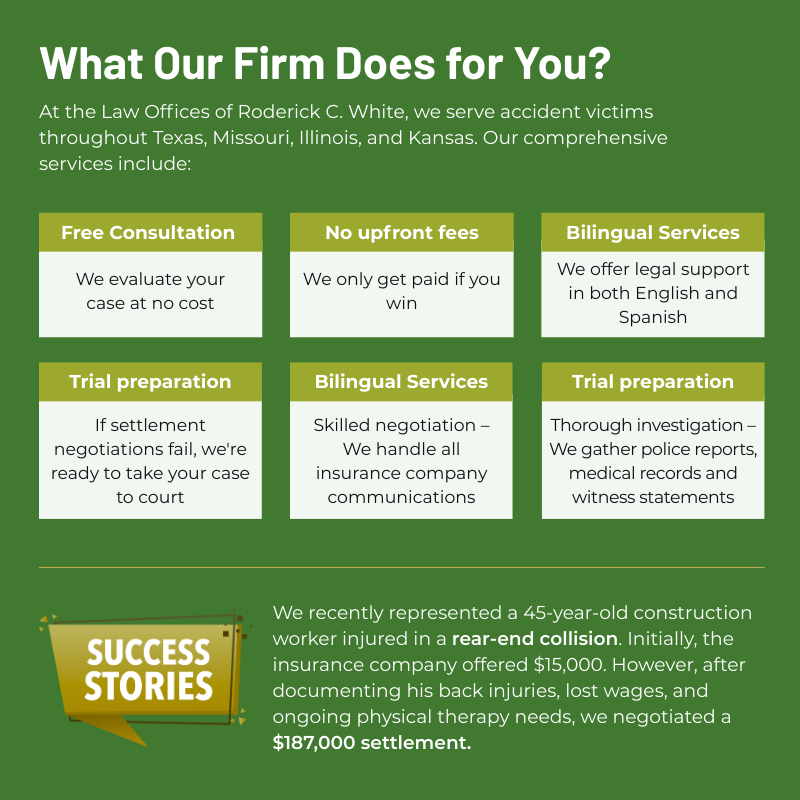
The legal professionals at the Law Offices of Roderick C. White have more than 70 years of combined legal and insurance claims experience. We’re licensed to practice in Texas, Missouri, Illinois, and Kansas, and we understand how to value accident/injury claims accurately. Therefore, we have the knowledge and resources to fight for the maximum compensation you deserve.
Don't let insurance companies take advantage of you during this difficult time.
The Law Offices of Roderick C. White is a full-service multi-state law firm with attorneys licensed in Texas, Missouri, Illinois, and Kansas. Our team specializes in accident/injury and criminal defense cases, with over 70 years of combined experience successfully representing thousands of clients across multiple states.
The information in this blog post is general and should not be considered legal advice. Please contact our legal team directly for specific guidance regarding your unique situation.